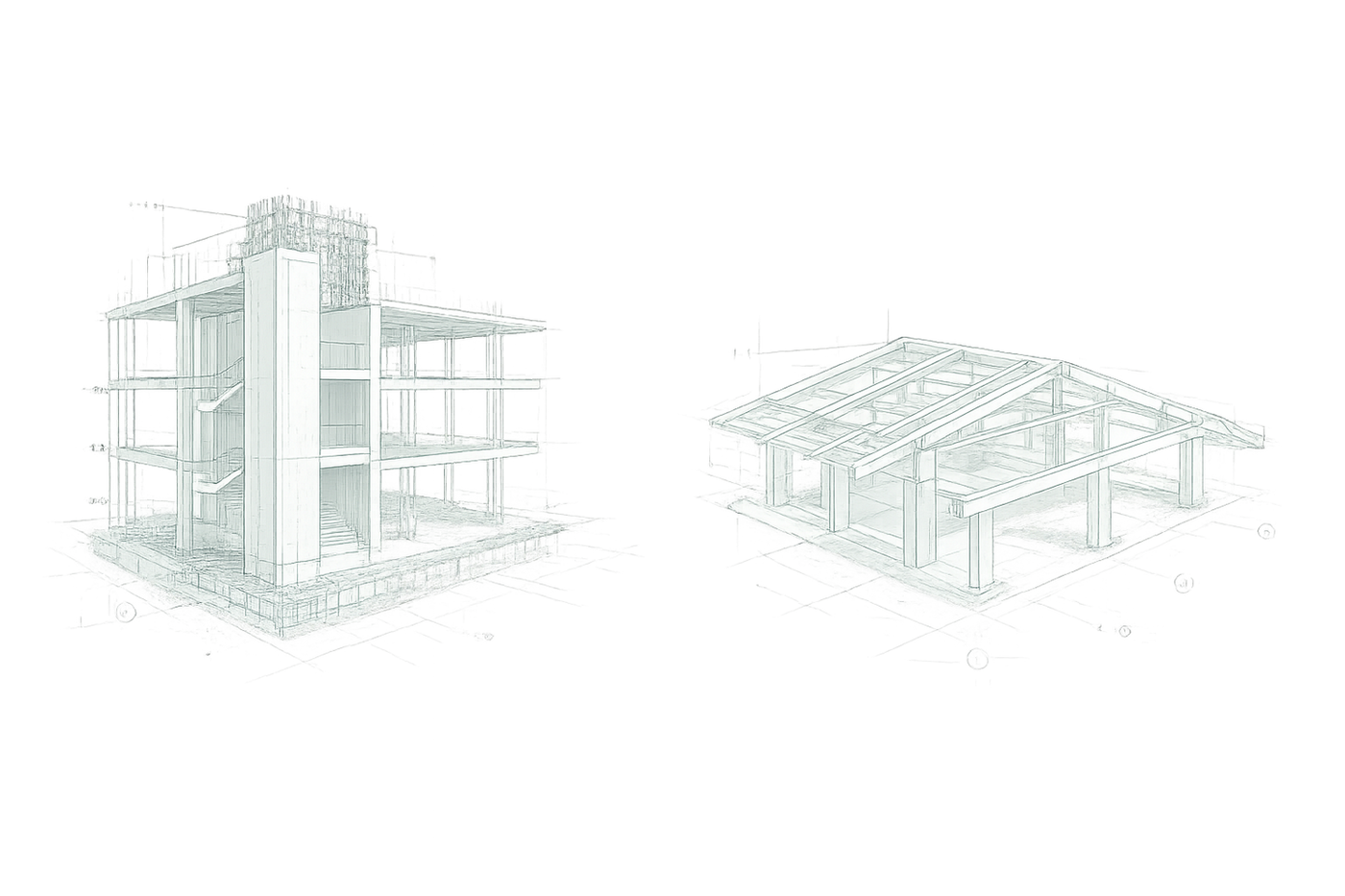

Oakland's Mandatory Soft Story Retrofit Program took effect on January 22, 2019, under Ordinance No. 13516. It requires owners of certain older apartment and condominium buildings, the kind with parking or storefronts at street level, to have them evaluated and, in most cases, seismically strengthened. The city cites Oakland's location on the Hayward Fault and says retrofits can save lives and housing.
The original deadlines for every tier have now passed.
What makes a building "soft-story"
The city describes a soft-story building as a pre-1991 structure with large ground-floor openings, such as a parking garage or storefront windows, and slender columns holding up the stories above. In the city's words, these buildings are "particularly likely to lean or collapse in an earthquake."
FEMA P-807 says these buildings have a high potential for collapse, mainly because their first-story walls are soft or weak, often from many openings such as garages or storefront windows. It cites Marina District damage in San Francisco in the 1989 Loma Prieta earthquake and tuck-under-parking apartments damaged in the 1994 Northridge earthquake.
ABAG estimates the Bay Area has roughly 20,000 soft-story buildings with five or more units. In its 2016 earthquake outlook, the USGS put the chance of a magnitude 6.7 or larger earthquake on the Hayward or Rodgers Creek faults at 33 percent for 2014 to 2043.
Which Oakland buildings are covered
Under Oakland Municipal Code Chapter 15.27, a building is subject if it meets all three conditions:
- Built before 1991. Constructed or permitted for construction before January 1, 1991, or designed under the 1985 or earlier Uniform Building Code.
- Five or more dwelling units. Any unit occupied as a home counts, approved or not. A building that grows to five or more units becomes subject when permits for the added units are issued.
- A wood frame "target story." A lower story (or an underfloor area that extends above grade) whose walls are substantially more vulnerable to earthquake damage than the story above, and which relies significantly on wood-frame walls.
Subject buildings fall into three tiers:
- Tier 1: buildings whose owners didn't comply with Oakland's earlier mandatory screening ordinance, and buildings of 20 or more units that don't qualify for a later tier.
- Tier 2: 5 to 19 units that don't qualify for Tier 3, or legally permitted business space in the target story.
- Tier 3: legally permitted residential space in the target story (some buildings with occupied commercial space could also qualify).
Exempt doesn't mean earthquake-safe. The city notes that masonry or concrete buildings and four-unit buildings can have serious deficiencies and still fall outside the program.
Where the deadlines stand in 2026
The program has five steps: (1) and (2) optional petitions showing a building isn't subject or belongs in a later tier; (3) a mandatory evaluation and initial affidavit of compliance; (4) a retrofit permit or a target story evaluation report; and (5) completed work, final inspection and a final affidavit.
Oakland's Technical Bulletin 15.27-1 lists these dates for Steps 3, 4 and 5:
- Tier 1: February 21, 2021; February 21, 2022; February 21, 2023
- Tier 2: February 21, 2022; February 21, 2023; February 21, 2024
- Tier 3: February 21, 2023; February 21, 2024; February 21, 2025
Steps 1 and 2 were due February 21, 2020, but the city's August 2024 extension form says exemption and tier-change petitions can be filed at any time.
What that means now:
- No notice doesn't mean no obligation. A building that meets the criteria is subject whether or not the owner got a letter.
- Extensions are per building. The city can grant one extension of up to a year for delays beyond the owner's control and one for financial hardship. Even with both, the final deadlines for Tier 1 and Tier 2 have passed. Ask the program for your building's current deadlines.
- Status is public. The city's "List of Potential Subject Buildings" (latest dated May 2026) shows each address, its tier and a status such as "Complied" or "Exempt." Many entries show no status.
If your building is listed without "Complied" or "Exempt," contact the program at MandatorySoftStoryRetrofit@oaklandca.gov or the Building Department at (510) 238-3344 to confirm where it stands, and bring in a licensed engineer. Under the code, noncompliance can mean fines, written notice to lenders, insurers and tenants that the building is potentially seismically hazardous, posted signs, and a statement recorded with the County Recorder.
If you're buying
The code says a transfer of title can't change any deadline, and a financial-hardship extension doesn't automatically carry over to a new owner. The code also requires the city to send each building's compliance status to the County Clerk-Recorder every six months. Check the address on the city list and ask the seller for compliance paperwork. A pre-purchase structural inspection adds a structural assessment of the building's overall condition (ask for a quote for a multi-unit building).
What the evaluation and retrofit involve
The evaluation. An engineer or architect performs an ASCE 41 Tier 1 screening and prepares a schematic retrofit report, sealed by a licensed architect or civil engineer. The screening also flags fall hazards such as parapets, masonry chimneys and gas water heaters, which the chapter doesn't require fixing. Only the owner's signed affidavit goes to the city.
The design standard. Retrofits may follow Appendix Chapter A4 of the California Existing Building Code or ASCE 41, which can also show compliance by evaluation alone. Historic buildings aren't exempt but may use the California Historical Building Code.
The approach. Mandatory work is limited to the wood frame target story, which needn't be stronger than required to develop the strength of the stories above. That tracks FEMA P-807, cited in Oakland's bulletin: protect the first floor from collapse without driving earthquake forces into the upper stories.
Retrofit systems. Oakland's bulletin sets design rules for steel moment frames (qualifying proprietary frames are allowed), steel cantilevered column systems and new or strengthened shear walls. The engineer must also address the load path from the floor above the target story down to the foundation soil, and investigate any existing masonry partitions and unreinforced brick footings.
The process, step by step
- Confirm status and tier on the city list or with the program.
- Hire an engineer or architect to evaluate the building and, in most cases, prepare the retrofit design.
- Plan check and permit through the city's normal review, fees and inspections.
- Construction, usually by a contractor, with structural observation by the design professional (required on every Oakland soft-story retrofit) plus special inspection and testing.
- Close out with a final inspection and the final affidavit of compliance.
Tenants, rent and funding
Tenants. City notices go only to owners, who must tell tenants about scope and timing. The city's FAQ says ground-story tenants are most affected and strongly recommends consulting them during design; the work can often be tailored and phased to reduce the impact.
Rent. According to the city's FAQ, owners must petition the Rent Adjustment Program, where a mandatory soft-story retrofit may count as a capital improvement, with 70 percent of actual costs passed through over 25 years, subject to caps. The FAQ also says owners generally must pay temporary housing costs if tenants are displaced for code compliance. Confirm details with the Rent Adjustment Program at (510) 238-3721.
Funding. The city's program page points owners of 5- to 10-unit buildings to the California Residential Mitigation Program's Earthquake Multi-Unit Retrofit (EMR) grant. It covers up to 70 percent of costs: up to $7,000 for engineering and permits plus up to $4,260 per unit toward the retrofit. Eligibility requires a city notice to retrofit. The 2026 registration window closes on September 30, 2026. Funding isn't guaranteed, and work or engineering done before acceptance isn't reimbursable, so check CRMP's EMR page for eligibility and future windows.
Property tax. Under California Revenue and Taxation Code Section 74.5, seismic retrofitting components on existing structures aren't "new construction." To claim the exclusion, the owner must notify the county assessor before or within 30 days of completing the project and file supporting documents within six months, so contact the Alameda County Assessor early.
How KSF can help
KSF Structural Inspection & Engineering was founded in Oakland in 1988. Our licensed engineers design soft-story retrofits for multi-unit buildings under Oakland's program and the separate Berkeley, San Francisco and Los Angeles programs, each with its own criteria, and support owners through plan check and construction. Our free Hayward Fault & Landslide Map shows mapped landslide zones and the Hayward Fault across the Berkeley Hills; it's a reference, not a substitute for an evaluation.
To request an evaluation, send your building's address through our inquiry form or call (833) 573-3644.
Frequently asked questions
My building has four units. Is it covered?
Not if it truly has four. The program covers five or more dwelling units, and any unit occupied as a home counts, approved or not.
I never received a notice. Do I still have to comply?
Yes, if the building meets the criteria. The code says failing to receive a notice doesn't relieve the owner of the requirement to comply.
The deadlines have passed. What should I do now?
Check your building on the city list, ask the program to confirm its tier and any extensions, and have a licensed engineer or architect evaluate it.
Will a retrofit make the building earthquake-proof?
No. The code expects the work to significantly reduce collapse risk, but it might not match the performance of a new building.
Sources
- Mandatory Soft Story Retrofit Program, City of Oakland
- Mandatory Soft Story Retrofit Program FAQ, City of Oakland
- Oakland Municipal Code Chapter 15.27
- Oakland Technical Bulletin 15.27-1 (January 2023)
- List of Potential Subject Buildings, City of Oakland (May 2026)
- Request for Extension of Compliance Deadlines, City of Oakland (August 2024)
- FEMA P-807 (May 2012), Seismic Evaluation and Retrofit of Multi-Unit Wood-Frame Buildings With Weak First Stories
- USGS Fact Sheet 2016-3020, Earthquake Outlook for the San Francisco Bay Region 2014–2043
- ABAG Soft Story Retrofit Technical Addendum (July 2026)
- The Earthquake Multi-Unit Retrofit, California Residential Mitigation Program
- California Revenue and Taxation Code Section 74.5
- Mandatory Earthquake Retrofit Programs, City of Berkeley
- Soft Story retrofit permit steps, SF.gov
- Soft-Story Retrofit Program, LADBS