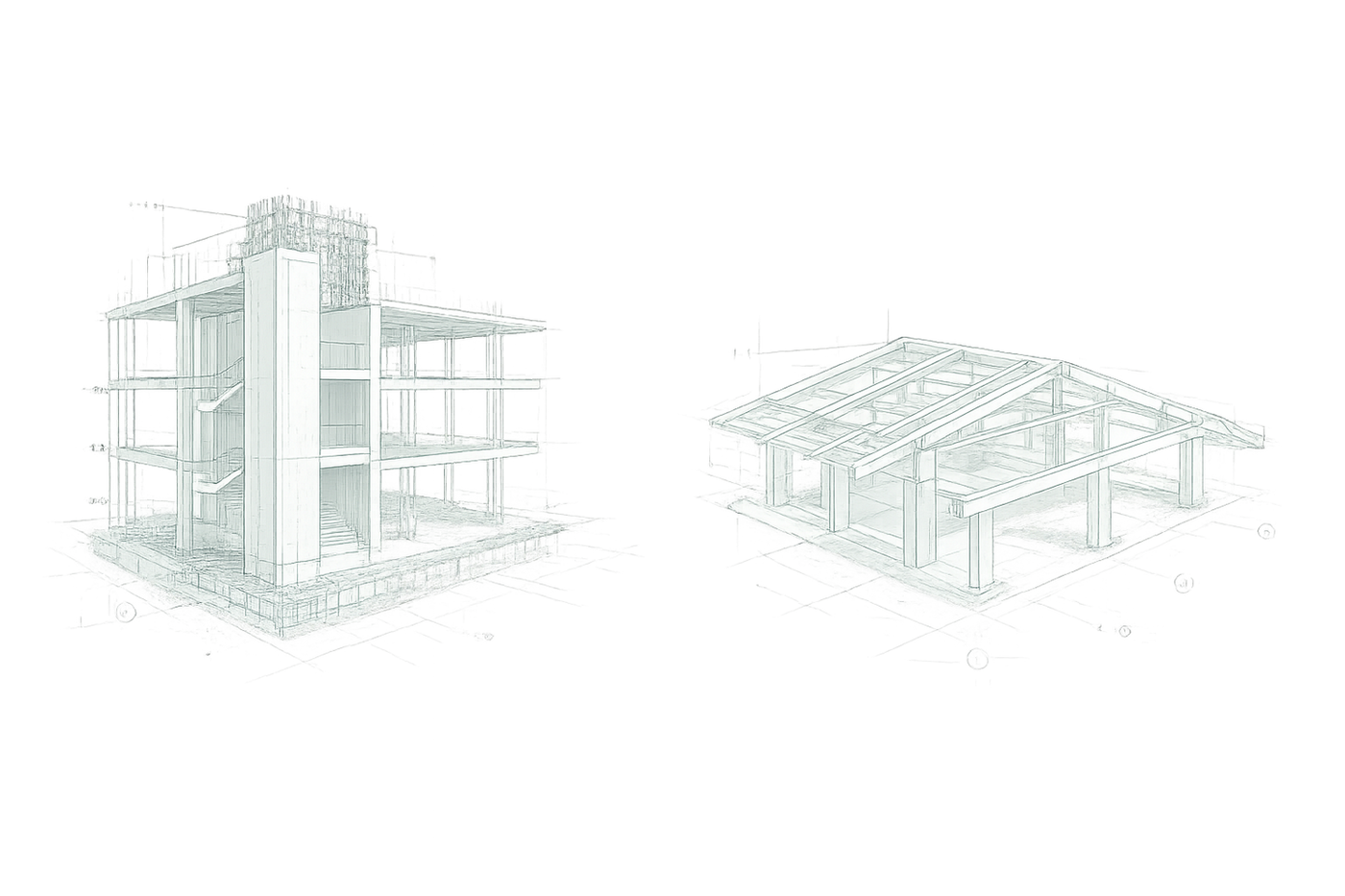

Buying a home in California usually comes with a set inspection window and a stack of reports. A general home inspection is the normal starting point, but sometimes that report, the seller's disclosures or the house itself raises a structural question beyond a home inspector's role. This guide from KSF Structural Inspection & Engineering explains when to get a structural inspection and how to fit one into escrow.
Home inspection vs. structural inspection
California law defines a home inspection as a noninvasive, physical examination of a one-to-four unit home's systems and structural components, done for a fee in connection with a transfer such as a sale and designed to identify material defects (Business and Professions Code 7195). A material defect is one that significantly affects the home's value, desirability, habitability or safety.
The American Society of Home Inspectors (ASHI) publishes a national Standard of Practice (ask which standard your inspector follows). It has the inspector inspect structural components, including the foundation and framing, and describe how the crawlspace and attic were inspected. It also says the home inspector is not required to:
- Provide engineering or architectural services or analysis
- Offer an opinion about the adequacy of structural systems and components
- Determine the causes of conditions, or the methods, materials and costs of correcting them
- Report concealed conditions or latent defects, or inspect geological and soil conditions
State law draws a similar line: home inspectors who are not registered engineers may not perform analysis of a home's structural integrity that would amount to practicing civil engineering (Business and Professions Code 7196.1).
This is a division of work, not a knock on home inspectors; California law lets their report include "recommendations for evaluation by appropriate persons." A structural inspection is narrower and deeper: how the structure carries its loads, what is likely causing the conditions you see, and what signs of past movement mean for the house.
Red flags that call for a structural inspection
Consider a structural inspection when the home inspection report recommends structural evaluation, or when you notice:
- Cracks with a pattern, such as diagonal or stair-step cracks, or cracks in the foundation. Ready.gov lists new cracks in plaster, tile, brick or foundations among the warning signs of a slow-moving landslide; on a slope, ask about a geotechnical evaluation too.
- Doors or windows that stick, especially if this is new; Ready.gov lists this too.
- Sloping, uneven or bouncy floors.
- Walls, walkways or stairs pulling away from the house, or retaining walls and fences that tilt.
- Water collecting against the foundation, or a damp crawlspace.
- Past foundation repairs. Ask the seller for the engineering reports, repair contracts and permits.
- Additions, conversions or removed walls with no permit on file.
- A hillside lot. The state's Homeowner's Guide to Earthquake Safety notes that hillside homes require special engineering to resist earthquake shaking.
- An older raised-foundation house, with steps up to the first floor and a crawlspace below. The California Earthquake Authority notes these houses can shift off their foundations in an earthquake, and flags living space over a garage too. The state's Earthquake Brace + Bolt program targets wood-framed, pre-1980 homes with a raised foundation, so ask whether the house has been bolted and braced.
Older homes and the earthquake disclosure
For most sales of a one-to-four unit, conventional light-frame home built before January 1, 1960, Government Code 8897.1 requires the seller to give the buyer the Homeowner's Guide to Earthquake Safety and complete an earthquake hazards disclosure. Some transfers are exempt, such as foreclosures and court-ordered sales. The disclosure covers known weaknesses such as missing anchor bolts, unbraced cripple walls, unreinforced masonry, rooms above a garage and a water heater that isn't anchored or strapped (Government Code 8897.2).
The disclosure reflects what the seller actually knows; the 2020 edition of the guide says sellers need not open walls, hire an evaluator or fix the risks before selling. It adds that "Don't Know" answers may indicate a need for further evaluation, and advises buyers to have a qualified professional, such as an engineer, give an opinion on earthquake risks and the cost to strengthen the home. If strengthening comes up, see how seismic retrofits such as foundation bolting and cripple-wall bracing work.
Timing within escrow
Your contract's investigation contingency period sets how long you have for inspections. On the standard California Association of REALTORS (C.A.R.) form it has commonly been 17 days, but forms are revised, so check your contract. A practical sequence:
- Book the general home inspection as early as possible.
- Read that report and the disclosures promptly, and mark anything structural.
- Schedule the structural inspection right away, or book both at once if red flags are obvious at the showing or in the disclosures.
- Leave time for contractor estimates, then review the findings with your agent before the deadline.
What a KSF pre-purchase inspection covers
At KSF, our team walks the property, looking at:
- Foundation and framing, including load paths and connections
- Concrete condition, soil interaction and signs of settlement
- Signs of past movement, such as diagonal and stair-step cracks, sticking doors and sloped floors
- Drainage around the house
There are two formats, described on the structural inspection services page:
- Verbal Inspection, $600. Our team inspects on site, walks through the findings with you and answers your questions.
- Stamped Report, $850. Everything in the verbal inspection, plus a written engineering report with a P.E. stamp and signature, for escrow, real-estate transactions, insurance and official records.
In California, civil engineering reports, including structural ones, must be prepared by, or under the responsible charge of, a licensed civil engineer, and final reports must carry the licensee's signature and seal or stamp (Business and Professions Code 6735). Choose the stamped report when a lender, insurer, escrow officer or the other party wants a written report, and ask what they need before you book. No engineer can promise how a third party will treat a report.
How to prepare
- Collect the paperwork: the seller's disclosures (including any earthquake and natural hazard disclosures), the home inspection report and any earlier engineering or foundation reports, to show us what was flagged.
- Look up permits for additions, foundation work and remodels with the city's building department. In Oakland, for example, anyone can view general building records after 1987 in the Online Permit Center, but the Report of Residential Record (3-R), a home's permit history, goes only to the owner or someone the owner authorizes; ask the listing agent early.
- Ask the listing agent to arrange access to the crawlspace hatch and attic, with stored items moved away from garage foundation walls.
- Check the location. If a property is in an Alquist-Priolo Earthquake Fault Zone or a state-mapped Seismic Hazard Zone (liquefaction or earthquake-induced landslide), that must be disclosed to the buyer. You can look up an address on the state's EQ Zapp map. Not every area has been evaluated yet, and the state notes the map may not show every hazard. KSF's free Berkeley Landslide & Hayward Fault Map covers the Berkeley Hills only, with generalized boundaries. The Bay Area Soil Map & Profile Explorer covers Alameda and Contra Costa counties; mapped surface soils may not reflect fill or cut at a given site. These are screening tools, not a site investigation.
- Plan to attend, ideally with your agent.
After the inspection
If repairs are recommended, get estimates from licensed contractors. If the work needs engineered drawings for a permit, KSF's structural engineering services include permit-ready design, plan-check responses and construction support.
The state earthquake guide suggests negotiating the cost of proposed repairs with the seller. It notes that state law does not require either the seller or the buyer to strengthen a home against earthquakes, though sellers of pre-1960 homes must properly strap the water heater. Local rules can differ: some cities, such as Los Angeles, require retrofits of certain older multi-unit buildings, so check with your city. Repairs, credits or a price change are for buyer and seller to negotiate; your agent or a real estate attorney can advise you.
Buying in the East Bay, Los Angeles County or the Sacramento Region and facing a structural question? Request an Inspection or call (833) 573-3644. Book early to leave room in your contingency period.
Frequently asked questions
Is a general home inspection enough?
It is the right place to start, but under the ASHI standard a home inspector need not provide engineering analysis or an opinion on structural adequacy. If the report recommends further evaluation, or you see the red flags above, get a structural inspection.
How much does a pre-purchase structural inspection cost with KSF?
KSF's listed prices are $600 for a Verbal Inspection and $850 for a Stamped Report.
Should I choose the verbal inspection or the stamped report?
The verbal inspection gives you answers on site for your own decision. Choose the stamped report if someone in the transaction asks for a written report or you want a signed record; confirm what they need first.
Can a structural inspection tell me whether a hillside is stable?
A structural inspection covers the house, its foundation and signs of movement. Slope and soil stability are geotechnical questions; the state's earthquake guide points buyers to a licensed geotechnical engineer or engineering geologist for them.
How do I check an engineer's license?
The state engineering board links to a license search showing the current status of California-licensed professional engineers.
Sources
- Cal. Business & Professions Code 7195
- Cal. Business & Professions Code 7196.1
- Cal. Business & Professions Code 6735
- ASHI Standard of Practice
- Cal. Government Code 8897.1
- Cal. Government Code 8897.2
- Homeowner's Guide to Earthquake Safety, 2020 Edition
- California Earthquake Authority, Strengthen Your House
- California Residential Mitigation Program, Earthquake Brace + Bolt
- Ready.gov, Landslides & Debris Flow
- California Geological Survey, EQ Zapp
- California Geological Survey, Alquist-Priolo Earthquake Fault Zones
- California Geological Survey, Seismic Hazards Mapping Act
- C.A.R. Quick Guide, Contingencies and Cancellation (2017)
- City of Oakland, Planning & Building Records Requests
- City of Los Angeles, Soft-Story Retrofit Program
- BPELSG, License Lookup